

In Japan, silence isn’t just the absence of sound — it’s a design principle. Walk into a Shinto shrine, step onto a Shinkansen carriage, or take a moment in a minimalist office lobby, and you’ll feel it: a quiet that isn’t hollow but intentional. In the West, quiet spaces often feel like breaks from noise — libraries, meditation rooms, remote retreats. In Japan, calm is woven into the fabric of daily life — an unspoken agreement between people and their environment. Let’s explore how Japanese architecture, transport, workplaces, and etiquette come together to create a culture of calm — and how this contrasts with many Western urban soundscapes.
1. Temples: Silence as Sacred Architecture
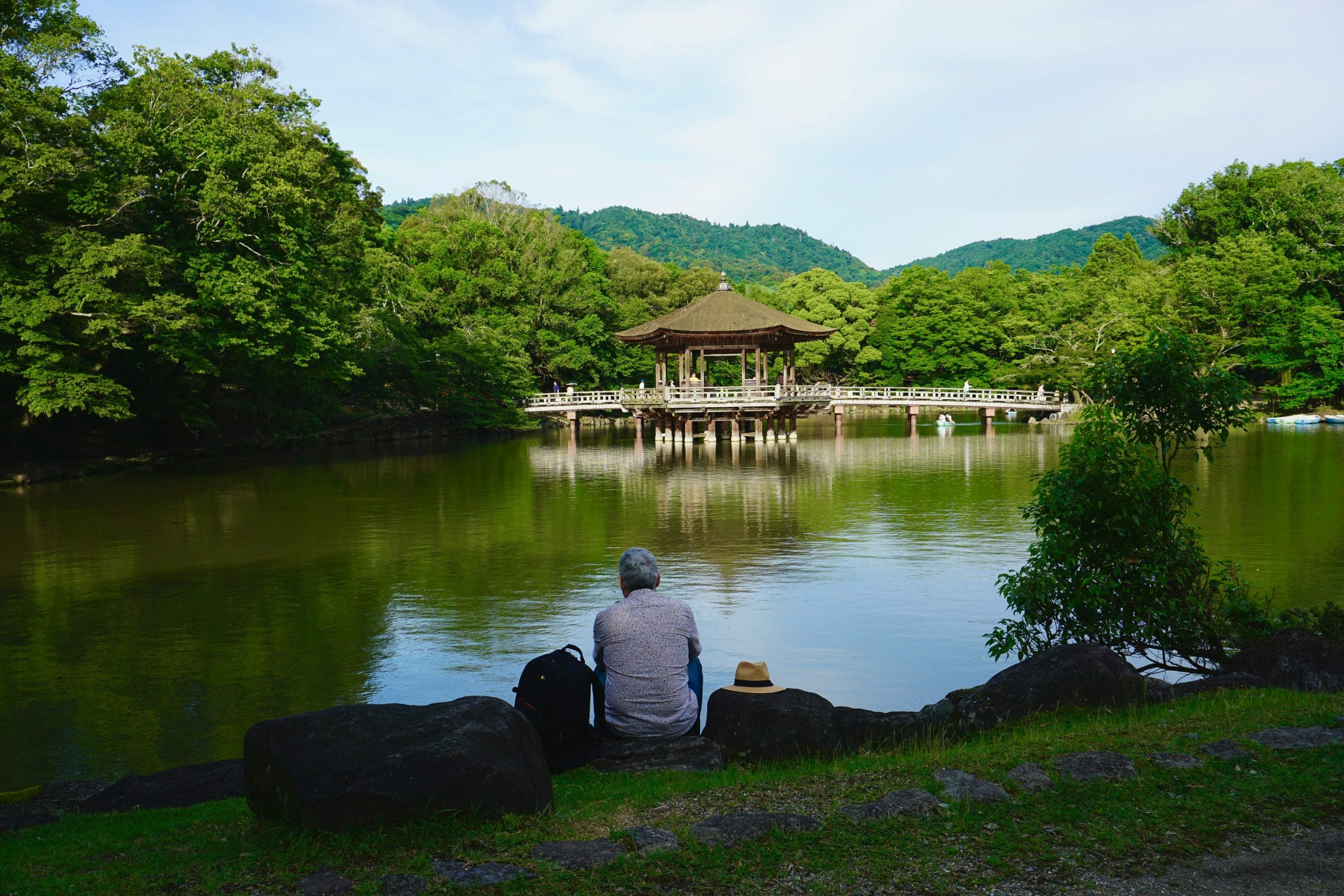
Japanese religious architecture isn’t about grandeur for its own sake — it’s about resonance with quietude. At Buddhist temples and Shinto shrines, the placement of buildings and materials is meant to diminish distraction and amplify stillness.
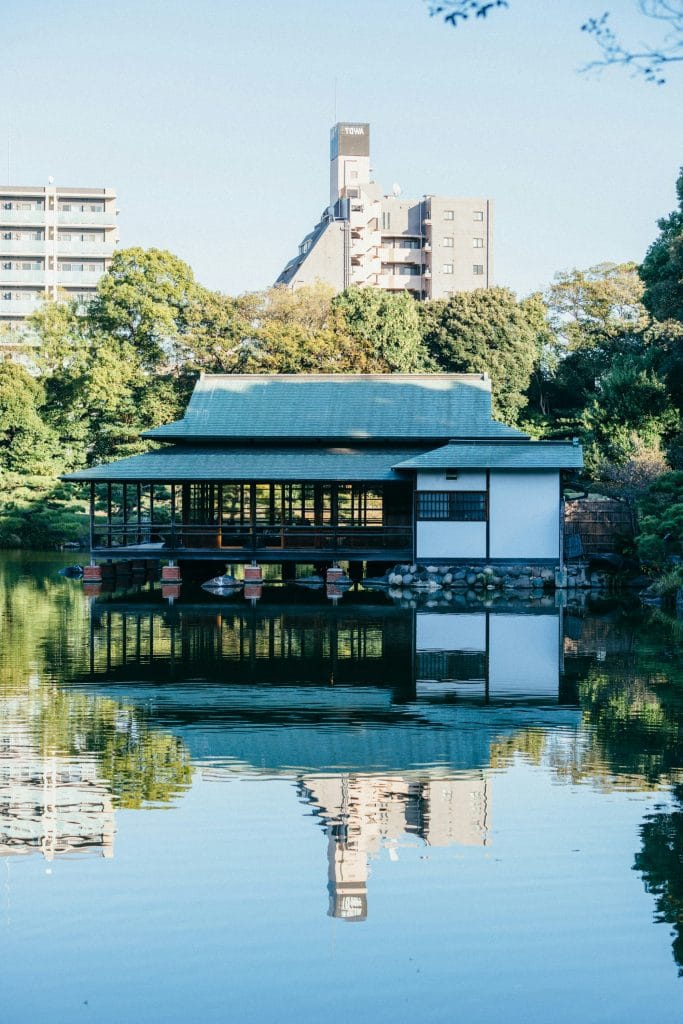
Traditional Japanese architecture often uses wood, paper, and natural stone, blending structures seamlessly with gardens and nature rather than dominating them. This aesthetic — spaces that almost disappear into their surroundings — reflects a broader philosophy of harmony between humans and nature.
Even the empty spaces carry meaning. Zen temple design — such as at Ryoan-ji with its raked gravel gardens — uses simplicity to guide contemplative focus, rather than ornate decoration. This is architecture as spiritual quiet, not spectacle.
Contrast this with many Western religious spaces: soaring vaults and echoing chambers that celebrate drama and acoustics. Japanese sacred spaces instead invite you to listen inward, to the breath, footstep, or whisper of the wind.
2. Trains: Etiquette Is the Soundtrack of Calm
Step onto a train in Tokyo or Osaka, and you’ll notice something remarkable: nearly no one is talking. Voices are low, phone calls are rare, and even music is kept to personal earbuds. It’s not compulsory — it’s cultural etiquette.
Japanese public transport isn’t silent because of enforced rules written on signs; it’s quiet because people internalize courtesy. From a young age, Japanese children are taught that making loud noise in public is inconsiderate. This emphasis on not disturbing others shapes a commuting culture where silence is a form of mutual respect.
Train companies even compose unique train melodies — short chimes played at departure that evoke calm and cue smooth boarding. These aren’t shrill notifications but carefully arranged tones meant to feel gentle and reassuring.
Compare that with many Western cities where conversations, music, phone calls, and public announcements blend into a noisy tapestry. In Japanese transit, sound is curated — not just by technology, but by social consensus.
3. Offices: Quiet Productivity, Not Clattering Chaos
Modern Japanese workplaces aren’t silent mausoleums — but they are places where noise is mindfully moderated. Open offices here often balance collaborative spaces with quiet zones, maintaining an atmosphere where concentration isn’t bombarded by chatter.
Unlike some Western offices where impromptu calls, loud brainstorming sessions, and open desks can create a haze of background noise, many Japanese companies encourage focused work time and designate spaces for private conversations. Although styles vary, the underlying cultural value remains: minimize disruption, maximize respect for shared space.
This isn’t about suppressing energy or spontaneity — just like a tea house preserves ritual without rigidity — it’s about shaping an environment where sound supports function rather than overwhelms it.
4. Everyday Sound Etiquette: A Quiet Pact
It’s not just trains and temples — silence permeates everyday life.
- Restaurants and cafés: Conversations tend to be mellow, pitched at levels that don’t spill into neighboring tables.
- Shops and public areas: Announcements are designed to be clear but not intrusive.
- Phone etiquette: Many people set phones to silent or vibration in public spaces by default.
In Japan, noise isn’t seen as neutral — it’s a social consideration. Excessive sound is often considered a burden on others — a subtle but powerful cultural cue that shapes behavior. Contrast this with many Western cities where public vocal expression — loud phone calls, music without headphones, animated group chats — is not only accepted but sometimes expected as part of urban vibrancy.
5. Architecture: Silence Built into Form
Japanese architectural principles themselves contribute to a sense of calm — even when spaces are filled with people. Traditional design often emphasizes:
- Natural materials like wood and paper that absorb sound rather than reflect it harshly.
- Sliding doors and open floor plans that create fluidity and reduce the sharp echoes common in boxed rooms.
- Integration with nature — gardens and courtyards bring soft rustling, not intrusive noise, into the experience of space.
These aren’t accidental features; they come from centuries of crafting spaces that reflect ma — the Japanese aesthetic concept of negative space or emptiness that gives meaning to the whole. A room isn’t just its walls — it’s the breath between things that defines it.
Modern Japanese architects continue this tradition. Figures like Tadao Ando build with a deliberate focus on light, shadow, and open space that evokes calm rather than clamour — spaces where echoes are controlled and silence becomes part of the material experience.
6. Temples vs. Tower Blocks: Calm in the Heart of Cities
Even in the densest parts of Tokyo — near Shinjuku or Shibuya — a temple courtyard can feel like an acoustic oasis. Abruptly: a hush. Birds chirping instead of car honks. Footsteps that seem softer against gravel paths. This isn’t trickery — it’s a layering of design, culture, and expectation.
Traditional temples were oriented to encourage mindfulness and inward attention — not just spiritual contemplation, but a sensorial shift away from the chaos of the city. In modern Tokyo, urban planning often incorporates green pockets, waterways, and plazas that break up soundscapes, creating intentional pockets of calm among the frantic rhythm of urban life.
Compare this to many Western cities where noise management is largely reactive — sound walls, zoning laws, noise complaints — and often focused on reducing harm rather than designing for calm.
7. Silence and Society: A Cultural Harmony
Why does Japan prize quiet so consistently — across temples, trains, offices, and public behavior?
It comes down to collective harmony. Japanese social norms — rooted in Confucian thought, influenced by Shinto and Buddhist traditions, and reinforced by group-oriented education — place a premium on avoiding inconvenience to others and holding shared spaces as mutual responsibilities.
In many Western cultures, self-expression is a central value — voices are raised, conversations overlap, even protests make noise with purpose. That’s the soundtrack of democracy and dynamism. In Japan, expression isn’t suppressed — it’s contextualized. Loud bursts of joy happen at festivals and celebrations where they belong. Quiet conversation at a train station is itself a form of expression — of awareness, care, and shared rhythm.
8. A Soundscape of Respect, Not Absence
To a visitor, Japan’s quiet spaces can feel almost uncanny — so calm that even your own thoughts become louder than the world around you. But that stillness isn’t emptiness. It’s a soundscape of respect, a design choice that reflects who people are and how they see one another.
In the West, noise is often framed as a by-product of urban life — something to be managed, reduced, or compartmentalized. In Japan, sound — or the conscious choice of calm — is woven into design and etiquette. It’s architecture that listens, and a culture that hears.
So the next time you find yourself stepping off a bullet train into a hushed platform or entering a temple courtyard that seems impossibly still, remember: Japan didn’t stumble into silence by accident. It built it.
