
There’s an old joke among expats in Japan: “This country has the fastest trains in the world, yet you’ll still fax your train ticket.” On the surface, it feels contradictory. Japan is the land of Shinkansen rockets gliding at 320 km/h, vending machines that serve ramen and ice cream at the press of a button, and robots that serve tea with a bow. And yet — the flip phone still survives, the fax machine hums in offices and homes, and cash remains king at mom-and-pop shops. Welcome to Japan, where the future and the past don’t clash; they politely share the same tatami room.
Feature Phones: The Keitai That Refuse to Die
If you wandered Tokyo fifteen years ago, you’d have seen a sea of bulky flip phones — not iPhones. These keitai weren’t just phones; they were lifestyle platforms: email, camera, games, payment systems, all tailored to Japanese habits. They became so specialized that the term “Galápagos syndrome” was coined to describe them: technologies that evolved beautifully within Japan but became almost unusable elsewhere because they diverged too far from global norms. Think of quirky features like emoji sets before emoji was cool — they were born on Japanese phones.
Even as smartphones and 5G spread globally, a surprising number of people in Japan still choose feature phones — especially among older generations who value practicality and simplicity. They’re reliable, comfortable, and, frankly, familiar. There’s less “I need the newest thing” energy here than there is a contentment with what works. In a culture that prizes reliability and longevity, the flip phone is less old tech and more old friend.
Fax Machines: A Cultural Staple in the Digital Age
Nothing embodies Japan’s love of legacy tech quite like the fax machine. While much of the world relegated faxes to hospital basements and nostalgic documentaries, Japan’s fax is still found in many offices, schools, and even homes. Over 80 % of convenience stores (a cornerstone of everyday life here) offer fax services, and Japanese business communications often default to faxed forms and contracts.
Why? Part of it is practical: many Japanese still believe fax is more secure and tangible than email or cloud services. That physical transmission — pressing “send” and seeing the paper roll through — feels more controlled and formal, especially when real seals (hanko) and handwritten notes matter.
Culturally, too, continuity matters. Faxes bridged the era from handwritten letters to networked computers without forcing people to give up the ritual of writing. In a society where etiquette and presentation are almost ceremonial, the fax keeps its place not in spite of being dated, but because it feels right.
Cash Culture: Tangible Trust in Paper Money
You can’t stroll Nishiki Market or a rural shopping street without hearing the clink of yen coins and the rustle of bills. Japan remains remarkably cash friendly — tens of millions of transactions still happen with physical money every day, despite digital payment options growing. Some tourism guides note that up to 80 % of Japanese transactions are still made in cash, especially outside big city centers.
This isn’t because Japan lacks digital payments. Contactless cards like Suica are ubiquitous on trains and in convenience stores. So why the love affair with cash? Part of it is psychological — cash feels stable, especially in a country that has endured earthquakes, typhoons, and grid disruptions. If the power goes out, a yen note still buys lunch. A disaster-ready mindset makes physical money feel less like old tech and more like resilience insurance.
There’s also trust and privacy. Carrying cash here doesn’t feel risky — crime rates are low, and people are comfortable handling physical currency.
The Futuristic Face of Japan: Trains, Robots, and Society 5.0
Now don’t get the wrong idea. Japan isn’t stuck in a time capsule. Step onto a Shinkansen and you’ll understand why Japan still occupies the future in the global imagination. These sleek bullet trains, gliding with surgical precision and almost zero delays, embody an obsession with punctuality and engineering excellence that borders on the spiritual.
Then there are robots — from industrial arms on factory floors to autonomous helpers in hospitals and retail spaces. SoftBank’s Pepper robot and Honda’s heritage of humanoids like ASIMO capture the playful and practical sides of robotics culture.
And let’s talk Society 5.0, a Japanese government initiative that aims to knit together big data, AI, IoT, and human needs into a super-smart society where technologies are deeply integrated into everyday life to solve social issues like aging and urban stress.
This isn’t sci-fi for sci-fi’s sake — it’s policy. The idea is that the future isn’t something you chase with gadgets; it’s something you design for human comfort and inclusivity. That’s why robots help with elderly care, not just assembly lines.
Comfort with Stability: The Heart of Old Tech in Japan
So how do we reconcile clinging to flip phones and faxes with the rockets beneath bullet trains and robot arms in clinics?
It comes down to comfort with stability and reliability. Japanese culture often values risk avoidance over shiny innovation for its own sake. If something works — culturally, socially, economically — there’s strong inertia to keep it around. Innovation here doesn’t mean abandonment of the old, but an integration where the old coexists with the new.
This isn’t just stubbornness. It’s a deep cultural preference for harmony and incremental change. The West often equates modernity with newness. In Japan, modernity can also mean perfecting the present.
For example:
- Keeping cash isn’t just nostalgia — it’s disaster-proofing and trust in the tangible.
- Preferring fax for business isn’t ignorance — it’s about formality and a shared communication ritual.
- Choosing feature phones isn’t Luddism — it’s comfort with tools that fit human needs over trendiness
Tokyo’s Paradox: Ritual and Rocket Ships
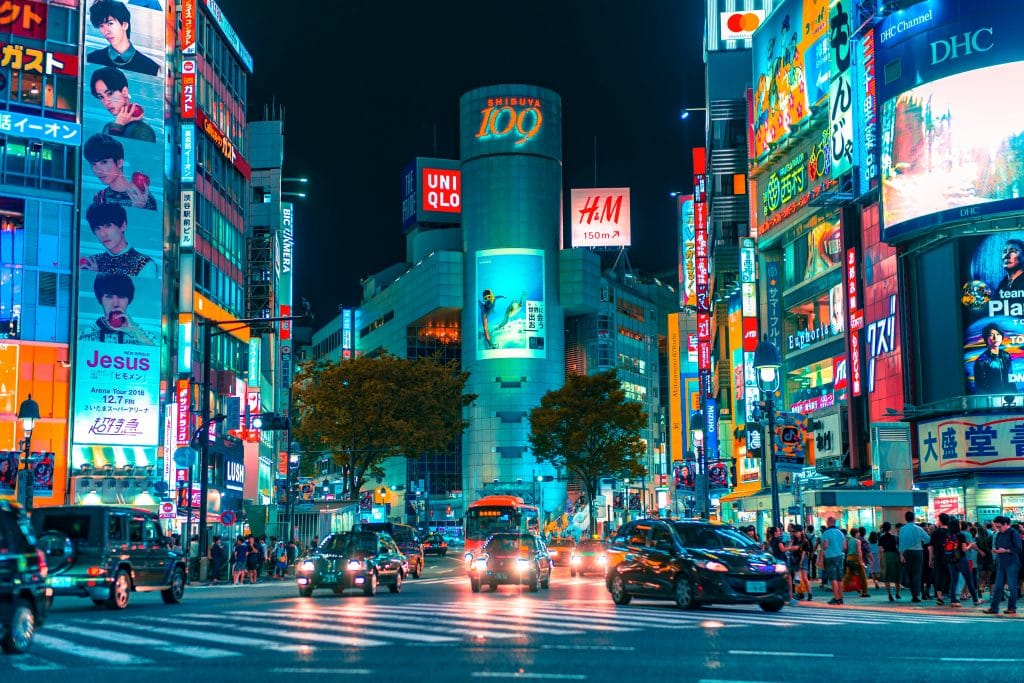
Walking through Tokyo, I often pause at the juxtaposition of shrines and skyscrapers. It epitomizes the Japanese tech paradox: the past and future are never enemies, only neighbors. You might send money through a smart card on your way to work, carry cash for lunch, and still fax a form on the commute home.
This layered coexistence — the old tech that feels comfortable sitting next to new tech that feels exciting — isn’t a failure to modernize. It’s a very Japanese expression of continuity with evolution.
In the end, in a country where securing consensus is more important than winning a race, technological progress isn’t measured by who gets there first — it’s measured by who brings everyone along.
And that’s why Japan still loves “old” tech, even while it builds tomorrow on rails that hum like electricity.
