

The morning we set off for the Inca Trail the sky looked like someone had polished it with a lens cloth: that thin, high-altitude blue that photographers politely call “crisp” and grumpy travelers call “very cold, thank you.” Our group was a cheerful international collage—two Australians who treated every hill as a friendly challenge, a retired schoolteacher from Ohio who packed seven pairs of hiking socks, and me, carrying a camera and an attitude that said, convincingly, I was prepared for everything. I wasn’t. The mountains were.
If you haven’t walked the Inca Trail, imagine a stairmaster designed by someone with an obsession for gradients and history: stone steps climbing through cloud forest, narrow Inca corridors that feel like the bones of a cathedral, and views that keep making your throat shift between grateful and breathless (literally). The trail isn’t just a route; it’s a steep, cultural conversation between past and present — and my lungs were suddenly very interested in joining that conversation via wheeze.
The first night in Cusco gave me a tiny, ignorantly confident head-bump of altitude. I chalked the headache up to travel fatigue. By Day Two, as we rose through puna grasses and past llamas who looked like shaggy old monarchs, the head-bump introduced itself properly: dull, persistent, and accompanied by an appetite that had fled the scene. Acute mountain sickness (AMS) typically appears within 6–12 hours after ascent above about 2,500 meters and can include headache, nausea, dizziness, and fatigue — basically the travel equivalent of being ghosted by oxygen. Medical authorities agree: gradual ascent and awareness of symptoms are essential, and some people benefit from preventive medication like acetazolamide or from descending if symptoms worsen.
One of the Australians — let’s call him Ben because his name was Ben — treated the altitude with the same philosophy he used on barbecues back home: “We’ll do it harder.” Ben’s strategy was to whistle. He whistled up switchbacks, whistled at alpacas, whistled when snacks were not forthcoming. It was an optimistic, if medically dubious, tactic. The trail’s staff, who know the mountains better than anyone, counseled patience: slower pace, more water, fewer heroic sprints. The Peruvian authorities tightly regulate access to the Inca Trail — permits are limited daily and must be booked in advance, partly to protect the route and partly because the trail is narrow and demands careful crowd control. You can’t just show up and stride in; the government manages entry actively to preserve both heritage and hikers.
The alpacas were not impressed by Ben’s whistling. They have a curious face that reads like a permanent question and a throat that knows a remarkable range of opinionated noises — hums, clucks, and the occasional indignant spit reserved for particularly rude tourists. Alpacas are herd animals; their social language is subtle and expressive. If you stand directly between them and a path to lunch, they will remind you, politely but firmly, that this is their domain. One alpaca in particular — a small, dignified creature with a fringe that would shame many rock stars — made a point of approaching me and then turning its nose up as if to say, “You have brought a camera and little else.” National Geographic notes that alpacas hum to communicate a variety of feelings from contentment to alarm; their vocalizations are not to be underestimated.
Around midday on the third day, with my legs doing a convincing impression of stacked tofu and my mood oscillating between euphoric and mildly accusatory toward the concept of altitude, I was handed a bowl of quinoa soup by a kind portera who wore a hat with three more stories than I do. It smelled like comfort translated into steam. In Peru, quinoa is not a trendy import — it is the Andes’ own superfood, cultivated for centuries. Quinoa is rich in protein, essential amino acids, minerals and has been studied for anti-inflammatory and antioxidative properties. The FAO calls it “the golden grain of the Andes,” and scientists have written long, justified essays on its nutritional depth. This soup felt like centuries of Andean wisdom in a wooden ladle: warm, restorative, and oddly moralizing about my earlier hubris.
There is a particular kind of clarity that comes from hiking at altitude: a sharpening, not just of the eyes but of priorities. Small things expand — the quality of a bootlace knot, the generosity of a smile, the exact shade of cloud that promises sun. The Aussies debated whether to race a cloud (Ben was for; his mate, Laura, was suspicious). The Ohioan traded granular life advice for electrolyte tablets. The porters, who move with astonishing lightness despite carrying the camp like a second backbone, taught us how to fold a sleeping mat like a ritual and why local bread tastes better at 3,500 meters.
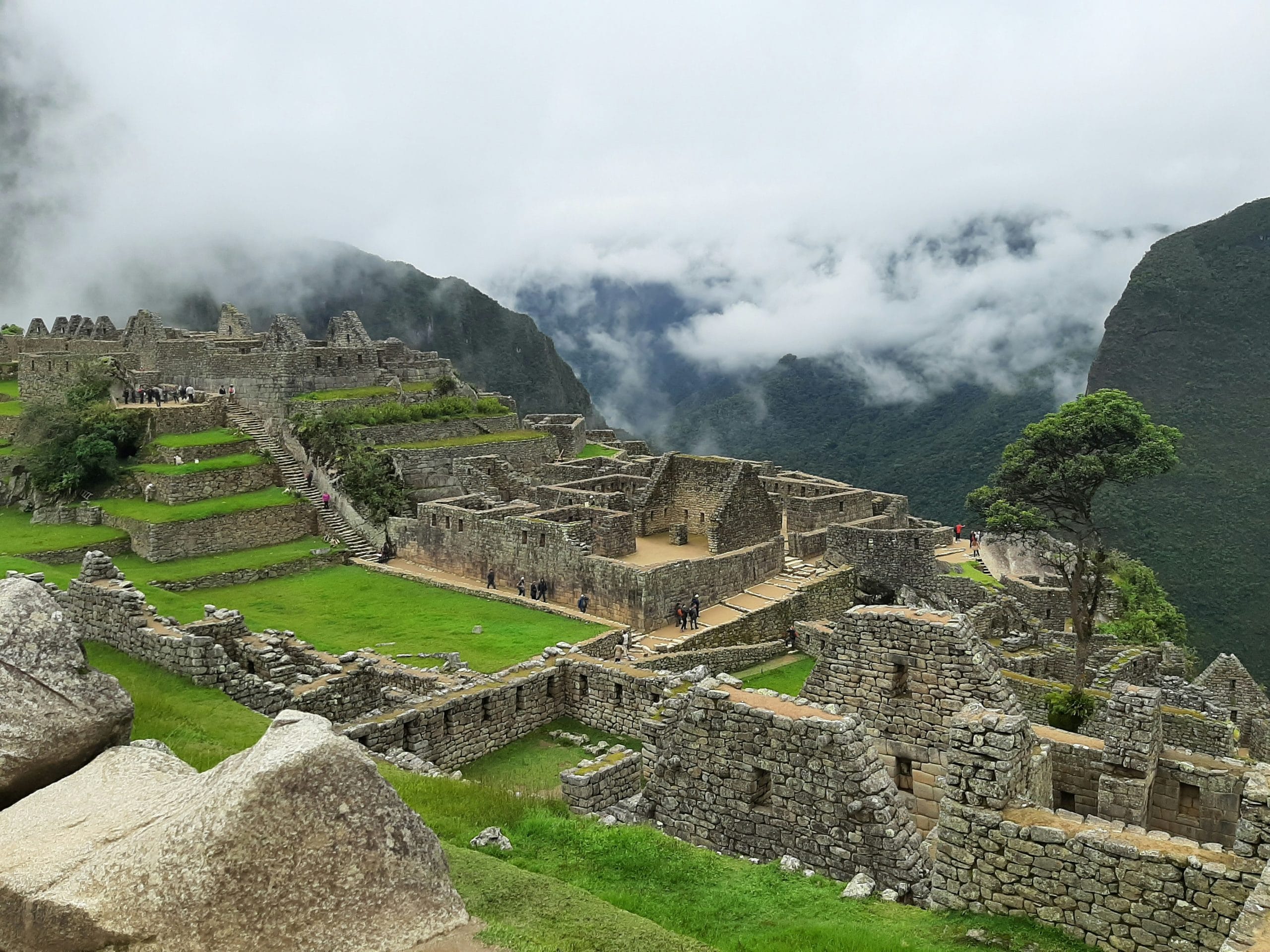
On the final climb toward Inti Punku — the Sun Gate — clouds rolled like old film over mountain ridges. Machu Picchu shimmered into view like a secret the world had been keeping for itself. For a moment, the whole dramatic business of altitude, alpacas, and aching muscles conspired to be utterly worth it. That view is why people constrain themselves to permits and regulations; why scientists, conservationists, and the Peruvian government insist on limits and management. It is both fragile and overwhelming, and when you stand there, slightly delirious from exertion and altitude, the past and present feel like something you can breathe in together.
Adventure, I discovered, is not just a set of dramatic moments. It’s a series of small, stubborn choices: to slow down when the world pushes you to hurry; to accept help from people who have practiced kindness as a profession (I mean the porters); to swallow a bowl of quinoa soup even if you are suspicious of its curative promises; to apologize to an alpaca if you accidentally stand in its photogenic path. Perseverance here wasn’t a chest-thumping virtue — it was the humility to listen to my body and to the land I was traversing.
If you’re planning your own high-altitude wander, be sensible: acclimatize, stay hydrated, consider medical prophylaxis if you have a history of altitude illness, and pay attention to the red flags—confusion, severe shortness of breath, or worsening headache are not badges of courage; they are alarms. Medical sources emphasize that descending is the most effective treatment for worsening altitude sickness, followed by oxygen and medications where appropriate.
We descended the last switchback as the light went golden. The Australians were plotting their return to Peru the minute their boots hit flat ground; I suspect they were planning to challenge the alpacas to a staring contest they would ultimately lose. I ate one more bowl of quinoa soup because rituals are worth repeating, and because my grandmother — who once insisted tea could cure a broken heart — would have approved of food that felt like medicine.
Months later, I scroll through the photos and notice the small things I almost missed in the moment: a porter’s gloved hands folded into a perfect triangle, a child at a roadside stall smiling because they know how to thread a bead like a magician, an alpaca looking like a philosopher who has seen too much to be amused. The big vistas are cinematic, yes, but the trip’s meaning lives in these modest frames.
Adventure, in the end, is a polite but persistent teacher. It gifts you a spectacular ruin, then quietly shows you where you were being foolish. It gives you an alpaca with attitude and a bowl of quinoa that tastes suspiciously like forgiveness. You return home with a camera full of evidence and a head full of stories, slightly humbled by altitude and strangely fierce with gratitude. The Inca Trail taught me something that no travel brochure could: that awe and absurdity walk together, and that the best kind of perseverance is gentle enough to listen to the body — and stubborn enough to keep walking when the cloud clears.
