

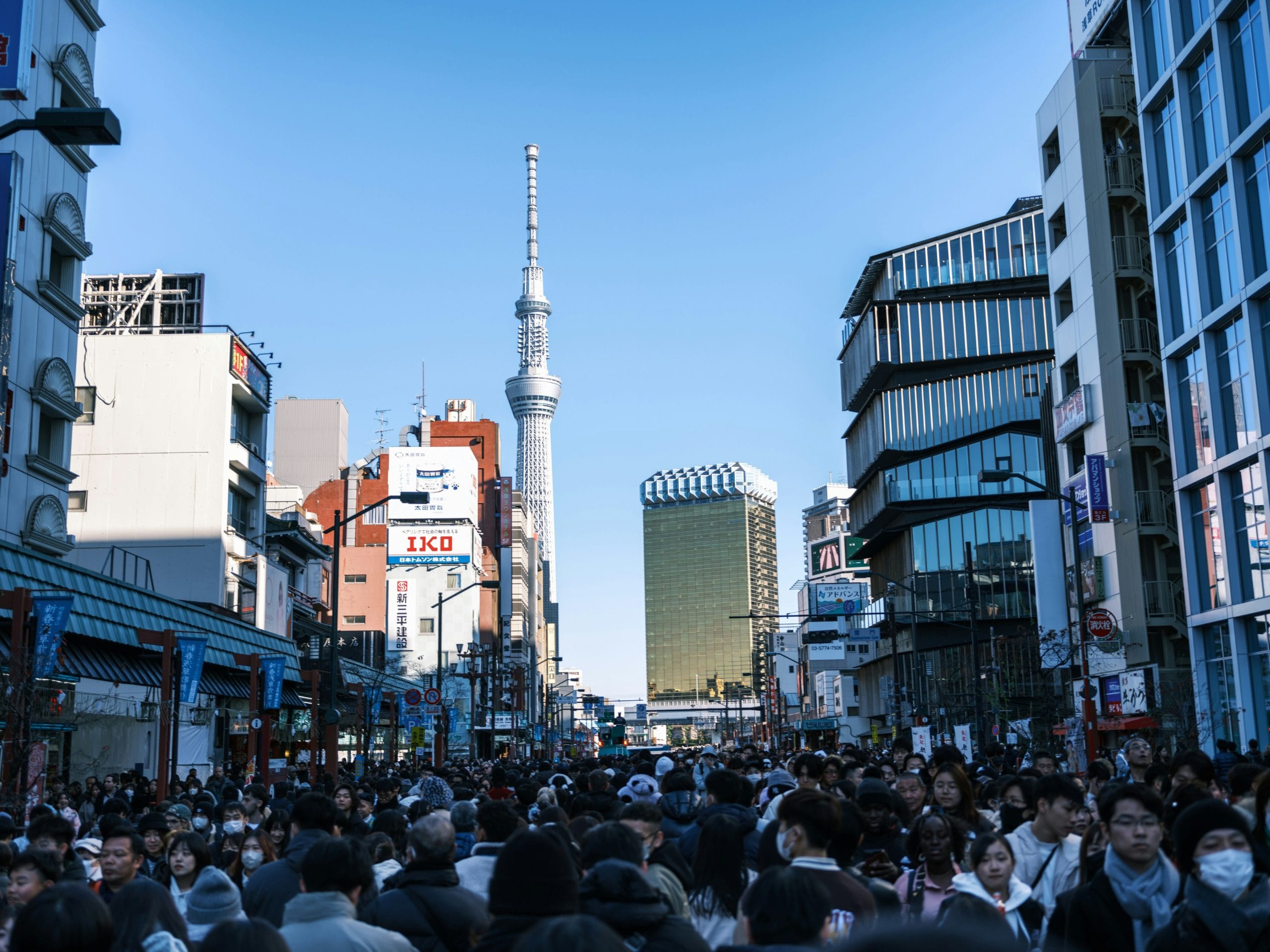
There’s a small, almost theatrical pleasure in Japan that foreigners notice quickly: the way the world here is choreographed. A convenience-store sandwich arrives in a plastic nest so gently arranged it feels like an offering. A commuter train pulls into the station, doors whisper open, and several hundred people slide on or off with the coordinated ease of a school of fish. A gift is wrapped not once but twice, each fold a punctuation mark of respect. This is not mere fetish for neatness. It’s a cultural habit: the elevation of the ordinary into something close to ritual, a daily civility treated as if it were small-scale art.
Two words help unlock why this happens: omotenashi and monozukuri. Omotenashi is the quietly intense Japanese idea of hospitality — not performance for applause, but the anticipatory care that runs underneath transactions and encounters. It’s the mindset that says: how can I make this moment comfortable, useful, or beautiful for you without announcing myself? This comes straight from practices like the tea ceremony (sado), where preparation and subtle attention are the measure of respect. (See Japan’s official tourism explanation of omotenashi.)
Monozukuri is the other half of the sentence — literally “making things.” But it is not factory efficiency as a spreadsheet would define it. Monozukuri is craftsmanship as identity: the pride in process, the idea that making something well is a moral and cultural act that shapes the maker. It’s why a bathroom tile, a pocket knife, or the smallest paper label might show traces of someone thinking about the user’s hand as it will hold that object. This ethos has been widely discussed as central to Japan’s manufacturing and craft traditions.
Look at packaging. In many countries packaging is a budget line item — a way to protect a product until it’s sold. In Japan, packaging is often the first chapter of the product’s story. From seasonal sweets with paper lids stamped in gold to minimalist tea tins whose seams are deliberately hidden, the wrapping communicates care, seasonality, and respect for the receiver. Scholars who study Japanese design point out that “listening to what the material wants to do” and creating an optimum sensory experience are core to the design process — packaging becomes another medium for aesthetic communication, not merely a container. This explains why returning home from a trip with a box of sweets feels slightly like carrying a small sculpture.
Public transport is where the philosophy shows its urban muscle. You don’t just get from A to B; you participate in a small, highly-tuned social mechanism. The near-obsessive punctuality of Japan’s railways — famously measured in seconds — is not only about efficiency. It signals respect for other people’s time, a collective promise that your day will not be stolen by unpredictability. Engineers and operators plan timetables down to precise margins; cleaning crews and staff perform roles that keep the system polite and smooth. The effect is aesthetic: stations feel ordered, trains slide through like choreographed beats, announcements are soft and functional rather than abrasive. The technical papers and transportation histories that document how the Shinkansen and related systems achieved this level of reliability make it clear that punctuality itself became a cultural value, not merely an operational target.
Daily routines — the small movements you’d normally take for granted — are treated with the same care. Consider the ritual of cleaning. In many Western contexts cleaning is outsourced or relegated to “maintenance.” In Japan, cleaning is often communal and educative: students clean classrooms, workers tidy workplaces, and individuals polish the spaces they use. The practice turns maintenance into an expression of responsibility and community care. That mindset reframes the act from a chore into a statement: the space matters because we all use it, and keeping it orderly is a quiet form of respect for others and for the things themselves.
So how does this compare with Western, efficiency-first thinking? I live in that contrast the way a photographer lives in light and shadow. Western approaches often prioritize speed, reduction of cost, and measurable outcomes. There’s beauty in that — clarity of process, scale, and innovation. But when efficiency is king, the tactile pleasures and social signaling that come from small rituals can be trimmed away. Where an American chain might patent a logistics hack to reduce delivery time and packaging, a Japanese producer might instead ask: how can the unboxing be kinder to the person who receives it? The answers point to different values: one system privileges throughput; the other privileges human experience.
That is not to romanticize Japan or declare it uniformly superior. Elevating the everyday comes with trade-offs. Extra packaging can mean more waste (and Japan is actively wrestling with sustainability questions), and the same insistence on uniform behavior can feel constraining. Yet I think the Japanese example reframes modernity’s central question: do we measure success solely by how quickly we move things, or by how well we make people feel in the space between movements?
There’s also an aesthetic genealogy to consider. Concepts like wabi-sabi — the appreciation of impermanence, imperfection, and quiet simplicity — have given Japanese aesthetics a vocabulary that celebrates subtlety rather than spectacle. Wabi-sabi isn’t about polishing into perfection; it’s about finding grace in a slightly frayed edge or a repaired bowl. That philosophy bleeds into food presentation, gift wrapping, and interior design, where modest materials are arranged to highlight texture, light, and time. If a Western designer sometimes views beauty as the product of deliberate alteration, a wabi-sabi sensibility looks for beauty in restraint, in revealing life’s marks.
A short anecdote: my grandmother would never hand me a steamed bun with bare hands. She’d place it on a clean sheet of paper, fold the paper neatly, and hand it over with a tiny, almost embarrassed flourish — like she’d remembered to set a small stage for the snack. To her it wasn’t showy; it was the only way to pass something along. That humility — making an ordinary exchange feel considered — is the emotional thread that connects tea-ceremony precision to department-store kindness to the engineer who tweaks a timetable by 30 seconds because it saves a commuter the time of a single worry.
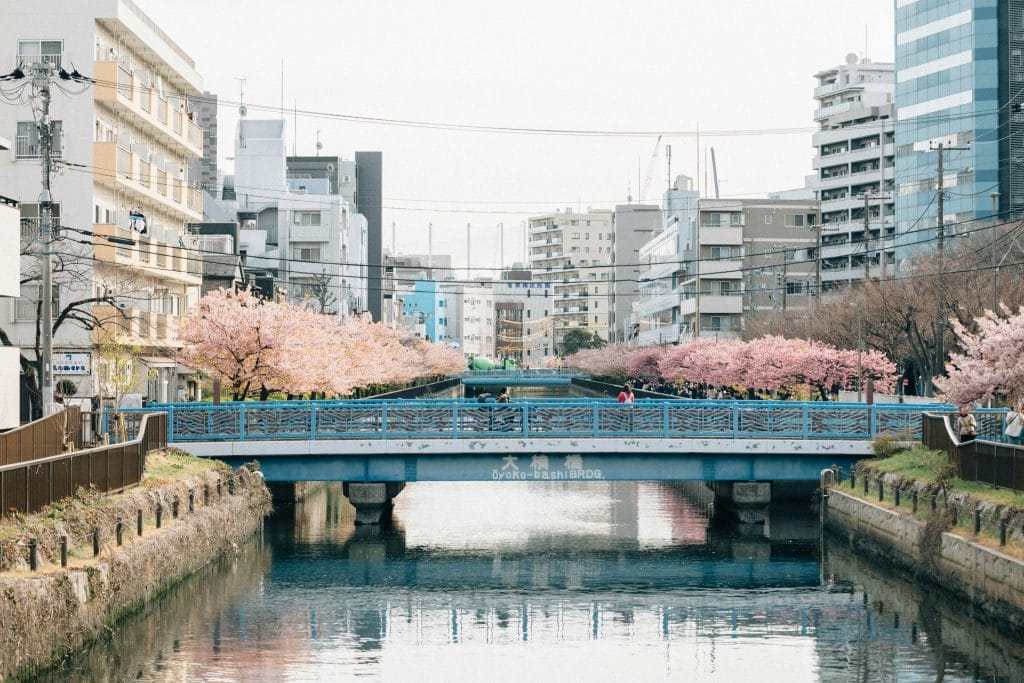
Practically, treating the everyday like art yields a cascade of benefits. It enhances durability: goods tend to be made for longer use because the maker cares about reputation and lineage. It builds social trust: when people expect that public services will be calm, clean, and punctual, anonymous interactions are less stressful. It improves the small joys of life: the pleasure of a well-sealed package, the exactness of a train’s arrival, the soft-coated warmth of a conbini onigiri wrapper. These are low-stakes delights, but — put together — they make a nation’s daily life feel stitched with intent.
If you’re a traveler or a designer, notice the difference and don’t mistake it for mere quirk. Start small: accept a wrapped gift properly; notice the packaging’s texture; slow down to watch a station cleaning crew work for five minutes. You’ll see that the artfulness is not ornamental but functional. It keeps systems calmer, people kinder, and minor interactions less wasteful of attention.
Finally, what lessons should other societies borrow? Not the imposition of ritual for ritual’s sake, and certainly not the erasure of spontaneity. Rather, think about intentionality. Can a product, a public space, a transit system be designed so that it not only performs efficiently but also respects the person using it? Can craftsmanship be taught as a value, not just a skill? Those are the soft changes that nudge efficiency into elegance.
In Tokyo light — especially in that flat, forgiving wash of winter that turns storefront glass into little canvases — the ordinary reads like a composition. It’s easy to mistake such care for a quaint national peculiarity. It’s better to see it as a deliberate cultural choice: that life’s tiny transactions are worthy of attention, and that the small careful things people do every day add up into a communal form of beauty. That, to me, is the simplest reason Japan treats the everyday like an art form.
