

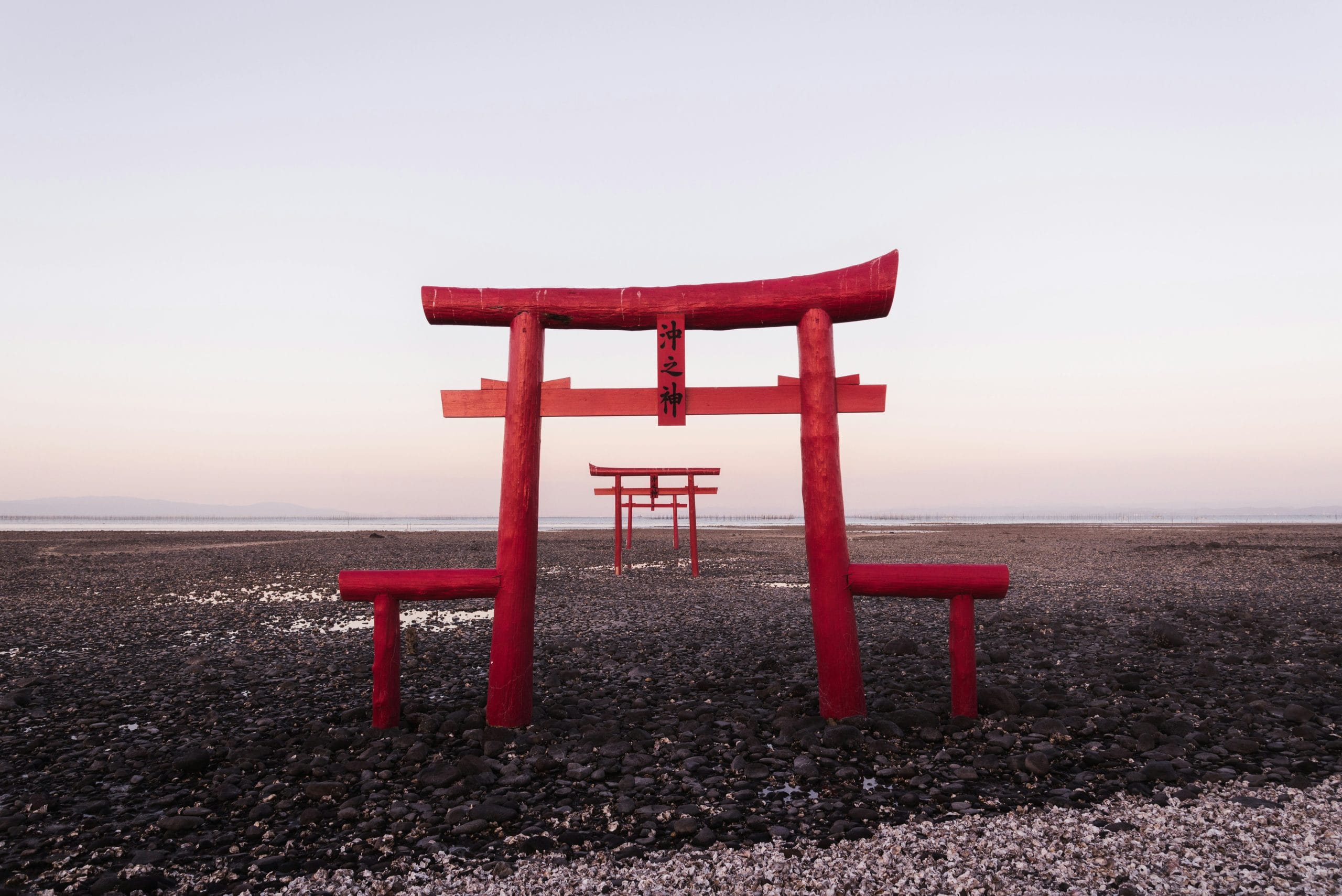
There’s a special kind of quiet in Japan — not the breath-held silence of a library reading room, nor the antiseptic hush of a museum, but a lived, layered calm that’s been designed into buildings, schedules, and bodies of people who study small sounds like weather. Walk into a Shinto shrine and the world’s volume drops two notches. Step onto a commuter train and you hear paper wrappers, a zipper, the sliding of a sleeve — but almost never a voice. This is not accidental. In Japan, silence is an architectural and cultural project: spatial planning, material choice, etiquette and even government programs conspire to keep the decibel level genteel.
Silence as a material choice
Traditional Japanese architecture teaches you to listen. Shoji screens, tatami mats, wooden verandas and the way a building breathes — all affect sound. Tatami and wood absorb footsteps with a soft thud; paper screens diffuse speech so conversations feel private without walls. Even in temple halls, architects design for specific acoustic effects — the placement of beams, the shape of ceilings and the distance between altar and audience influence how chants bloom and decay. Recent acoustic research points out that Buddhist temples are not merely symbolic sanctuaries; they’re tuned spaces where reverberation and directionality are considered as part of ritual and intelligibility. This is architecture behaving like an equal-opportunity musician: it amplifies what matters and swallows the rest.
If you look at modern projects in Japan, the same mindset shows up in unexpected places: office lobbies with double-height ceilings that channel noise away from workstations, or cafés that use deep upholstery and carefully placed bookshelves as acoustic baffles. Designers mix traditional absorptive materials (wood, cloth, layered paper) with modern sound-masking systems when privacy is essential — a practical, pragmatic marriage of old and new.
Trains: engineered calm and social contract
Japanese trains are a master class in social acoustics. The Shinkansen hums at speed in near-silence because of decades of engineering (aerodynamics, track design), but the calm you feel inside the carriage is as much cultural as it is technical. Around the country, “manner modes” (silent phone settings), clear signage, and the social norm against phone calls turn public transit into a shared, low-volume room. People don’t chatter casually — they treat the train like a public living room where everyone’s private thoughts are safe. Practical rule: if you must take a call, you step off at the next station. It’s polite and, frankly, quietly efficient.
There’s also design at the station level: platform edge doors reduce wind noise, crossovers are arranged to limit track noise bleed, and announcement systems are tuned to be intelligible without blasting at full volume. In a city where eight million people ride trains every day, these small decisions add up to a remarkable sonic civility.
Offices: from open-plan chaos to curated sound
Open-plan offices are a global headache; Japan is no exception. But the Japanese response often edges more toward “sound curation” than simple isolation. Many workplaces now use a combination of spatial layout, material choices, and mechanical sound-masking to reduce distracting speech while preserving visibility and collaboration. Think: low partitions with absorptive surfaces, quiet HVAC calibrated to hum at a frequency that musically “erases” speech, and designated focus booths for concentrated work. The goal is not absolute silence but a background that allows attention to land and stay.
Culturally, there’s also less tolerance for loud, performative meetings in public areas. The expectation is to reserve bigger, louder conversations for closed rooms. Because coworkers value the group’s comfort, small norms — close a laptop lid during a call, mute on shared video, keep lunch chatter to break rooms — become invisible rules that keep the workspace pleasant. You might call this “mutual acoustic respect.” I call it the office equivalent of removing your shoes before entering someone’s home.
Cafés and kissatens: hospitality shaped by hush
Japanese cafés are a study in deliberate quiet. The old-school kissaten — coffee houses that date to the early 20th century — were designed as places to read, think and sip slowly; their dim lights and heavy drapes are not just aesthetic choices but acoustic ones. More recently, Tokyo has seen a proliferation of “silent cafés” and anti-procrastination spaces where talking is discouraged and the seating arrangement communicates the house rules: bar stools for solo work, quiet tables for reading, and soft lighting that tells your body, “lower your voice.” These are businesses selling a product that’s hard to quantify: calm. If people will pay for a good espresso, they will happily pay for a few hours where noise doesn’t invade their thoughts.

Etiquette — the built-in acoustic control
Architecture only goes so far; people finish the design. Japan’s unspoken sound etiquette is its final layer of noise control. From trains to shrines, the rules are remarkably consistent: phones on silent, low voices, no eating where not appropriate, and a general attentiveness to how one’s behavior affects others. These norms are taught early (grandparents still scold loudly but lovingly about eating on the go) and reinforced by signage, announcements and social feedback. The result is a public environment where silence is both structural and social — a two-tiered system of built-in and voluntary behavior.
It’s worth noting that the government has even taken an interest in sound as cultural heritage. Initiatives like the “100 Soundscapes of Japan” highlight the positive sounds worth preserving — temple bells, seaside waves, the call of certain birds — emphasizing that not all sound removal is desirable. The goal is thoughtful sound design, not creating a noise-free dystopia.
The contrast: louder Western public space
Compare that with many Western cities, where public spaces are often louder by design or default. Cafés double as social hubs, public transit systems tolerate (and sometimes encourage) phone calls, and open-plan workplaces can drift into a culture of audible availability. The difference isn’t about better people or worse people; it’s about design intent and social contracts. Where Japanese spaces embed quiet into architecture and etiquette, Western spaces frequently leave it to chance and individual negotiation. This produces different sonic expectations: in Japan, your neighbor on the train is a fellow resident of a shared sound world; elsewhere, the neighbor may simply be another anonymous node in a network. The result is a different quality of public life.
What designers and travelers can learn
If you design spaces or travel through them, take three practical notes from Japan’s gentle pedagogy of quiet:
- Materiality matters. Soft surfaces, layered screens, and warm woods do as much to calm sound as signage does to calm behavior.
- Rules should be legible and graceful. Etiquette that’s signaled by design (seating types, lighting, signs) leads to fewer confrontations than blunt enforcement.
- Value sound, don’t erase it. Curate what you want to hear — the chime of a bell, the hiss of a coffee machine — and design to protect those sounds rather than trying to remove every decibel. Government programs and acoustical societies in Japan explicitly promote this nuance.
A final, small scene
On an early winter morning I watched an old woman in a shrine courtyard, her scarf tucked against the wind, dropping a coin into the offering box. She bowed, the bell above her head chimed and the sound hung: a bright, clean note that had time to fade. A group of teenagers walked by, voices low; a man on his way to work adjusted his manner mode. The world did not go silent — it never should — but it shifted into a frequency that made room for small, important sounds. That is Japan’s secret: silence is not the absence of life; it’s a choice to listen thoughtfully to what matters.
