

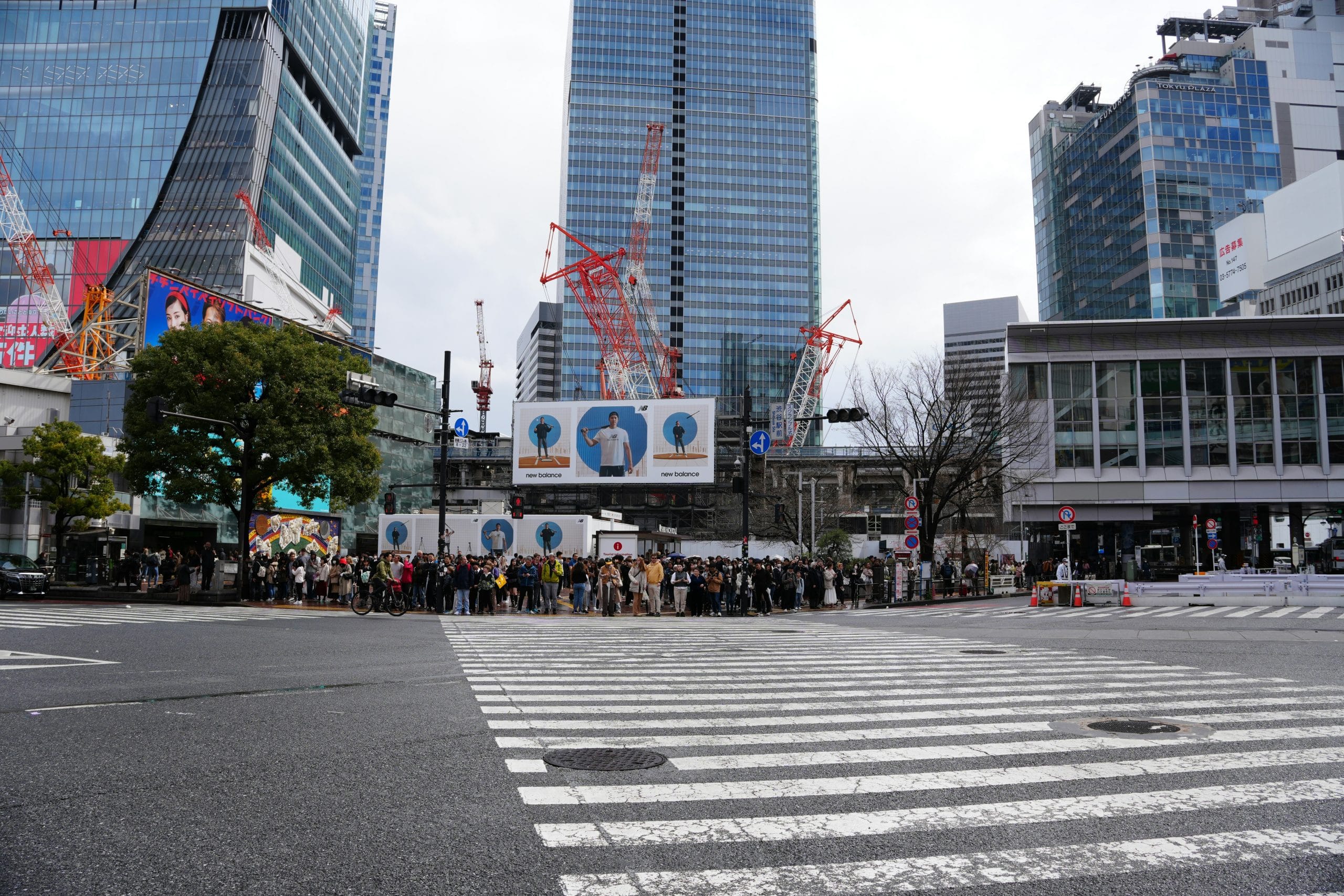
There’s a certain magic about waiting in Japan: you step into a queue and, somehow, ten minutes stretch into something short, tidy, even polite. It isn’t sorcery. It’s design — social, physical, and digital — baked into everything from ramen shops to municipal counters. Where Western queues often feel like the emotional equivalent of buffering, Japan’s queues feel like a quiet interlude, an organized beat in the soundtrack of the day. Let me take you through the little tricks — cultural and technical — that shave the sting off waiting.
First, the cultural frame. In Japan the baseline expectation isn’t impatience; it’s omotenashi — thoughtful hospitality that anticipates needs before they’re voiced. This isn’t a marketing slogan. It’s a centuries-old aesthetic that shows up in the tiny choreography of a tea ceremony and in the staff who hand you a wet towel before you sit. Service design aims to make the guest feel seen and respected, which includes respect for the act of waiting itself. Scholarly work tracing the roots and modern application of omotenashi explains how Japanese service culture systematically designs experiences to reduce friction and preserve dignity.
Second, the mechanics: Japan loves to turn waiting into a measurable, visible process. Two practical devices do most of the heavy lifting: the humble 整理券 (seiriken) — a numbered ticket — and the digital queue. Walk into a popular izakaya or a busy city hall and you’ll often find a ticket dispenser or a tablet that issues a number and displays the current serving number on a monitor. That number is a tiny promise: “Your turn is coming, and here’s where you stand.” It converts vague anxiety into a clear ordinal position, an immediate antidote to “how much longer?” Recent rollouts of digital ticketing systems across stations and public counters explicitly advertise the benefit: leave the physical line, check a screen or your phone, and use the wait productively. Companies such as VACAN and municipal pilots have pushed these systems into stations and public services. The result is less crowding, fewer anxious shoulders, and more time spent sipping coffee instead of stewing in line.
Why does a number help so much? Here psychology provides the answer. The classic service-management essay The Psychology of Waiting Lines lays out rules that still govern good queuing design: unoccupied time feels longer than occupied time; uncertain waits seem longer than known, finite waits; unexplained waits feel longer than explained ones. Managers who follow these ideas reduce perceived waiting by giving customers something to do, clear expectations, and explanations when things go wrong. Japan’s ticket systems and visible displays are a direct application of those eight propositions. In other words: give people a number, tell them what it means, and the brain will be much kinder about the clock.
That’s only half of the story. Japan layers visual indicators and micro-rituals on top of the ticket. In restaurants you’ll see small lanterns flip from cold to warm, lights that indicate “ready” at izakaya counters, or screens showing the wait in number-of-groups rather than minutes. At municipal offices, digital signage shows “currently serving: 34 — your number: 52” and often gives an approximate wait time or the number of counters open. The language is concrete: “あと4組です” (four groups remain) feels cleaner than “about 20 minutes,” because it gives a stable, countable metric. Visual indicators like these reduce uncertainty, which, as Maister and later researchers point out, shortens perceived wait times dramatically.
But Japan doesn’t rely on numbers alone. Designers understand that occupied time feels shorter, so waiting spaces are intentionally useful and attractive. Look around a train station’s waiting area: there might be a convenience store, a kiosk with local souvenirs, vending machines dispensing hot coffee, or an informational screen with train next-times and platform visuals. Restaurants often display a menu case with beautiful plastic food models (the famous sampuru) so you can preview dinner while you wait. Even the simple presence of small tasks — scrolling a menu, choosing a sake — transforms waiting from a vacuum into a tiny ritual. New research confirms this: active or passively engaged waiting (things to do, screens, small tasks) increases flow and satisfaction compared to passive unoccupied waiting. Japan borrows that insight and builds it into physical space.
Contrast this with many Western experiences. Often, the line is literal and the information minimal: a taped-off queue, a tinny hold-music loop on a customer-service phone, or an opaque “estimated wait: unknown.” The result is a psychological free-for-all. When you don’t know whether you’re fifth in line or fiftieth, your brain invents worst-case scenarios. When there’s nothing to do, time dilates. When the system feels unfair — first come, first served, except when it isn’t — irritation spikes. Japan reduces these failure modes through clarity, fairness, and the small courtesy of information.
There’s a technical point underneath the cultural and design layers. Queue management is now a field of engineering: analytics, virtual queues, and load-balancing borrowed from computer systems are imported into physical services. Japanese stations, hospitals, and municipal services increasingly use centralized dashboards to predict and display waits, and private startups offer easy plug-and-play systems to small restaurants. The practical payoff is two-fold: shorter actual waits through better resource allocation, and shorter felt waits through transparency and occupation. When a city office publishes “wait now: 12 minutes” that number might be elastic — but its very presence reduces the psychic cost of waiting.
A small, human example: a friend once waited outside a tiny tempura shop in Nihonbashi and was handed a call slip. The shop clerk said, with the soft gravity unique to good service, “You are number eight. There are about three groups ahead who ordered more items, so it may be a bit longer — please enjoy the park nearby.” That sentence did three things: it gave ordinal position, added a qualitative explanation, and suggested a pleasant way to spend the time. It was a micro-lesson in queue diplomacy: fairness, transparency, and a nudge to occupy the time — all wrapped in a small kindness.
Of course, perfection is a myth. Systems fail, displays lag, and on festival days even the most disciplined queuing nation will see frayed tempers. But the structural difference remains: Japan designs for patience. The infrastructure — seiriken machines, digital ticketing platforms, clear signage — lubricates the social contract of waiting. The culture supplies the patience; the design supplies the tools.
If you’re trying to borrow these lessons for a business or for travel, here are three practical takeaways inspired by what I see every day:
- Make the wait visible and countable. Whether it’s “five groups ahead” or a live number on a screen, convert ambiguity into a metric. (Even a conservative, honest estimate is better than silence.)
- Offer occupation. Menus, displays, small tasks, or even Wi-Fi and clear seating space transform unoccupied time into something tolerable.
- Explain and humanize. A one-sentence reason for a delay reduces anxiety. If you can suggest a pleasant nearby activity, you turn a wasted wait into a mini-adventure.
Waiting will never be my favorite pastime — I’m an impatient person at heart — but Japan has taught me that the way we wait says as much about a society as the way it entertains itself. A ticket, a number on a screen, a friendly explanation: tiny rituals with outsized effects. In Japan, waiting is not a punishment. It’s a designed interval — brief, tidy, and quietly civilized. And when I emerge from a line into a bowl of perfectly timed ramen, the wait feels, somehow, beautifully short.
