

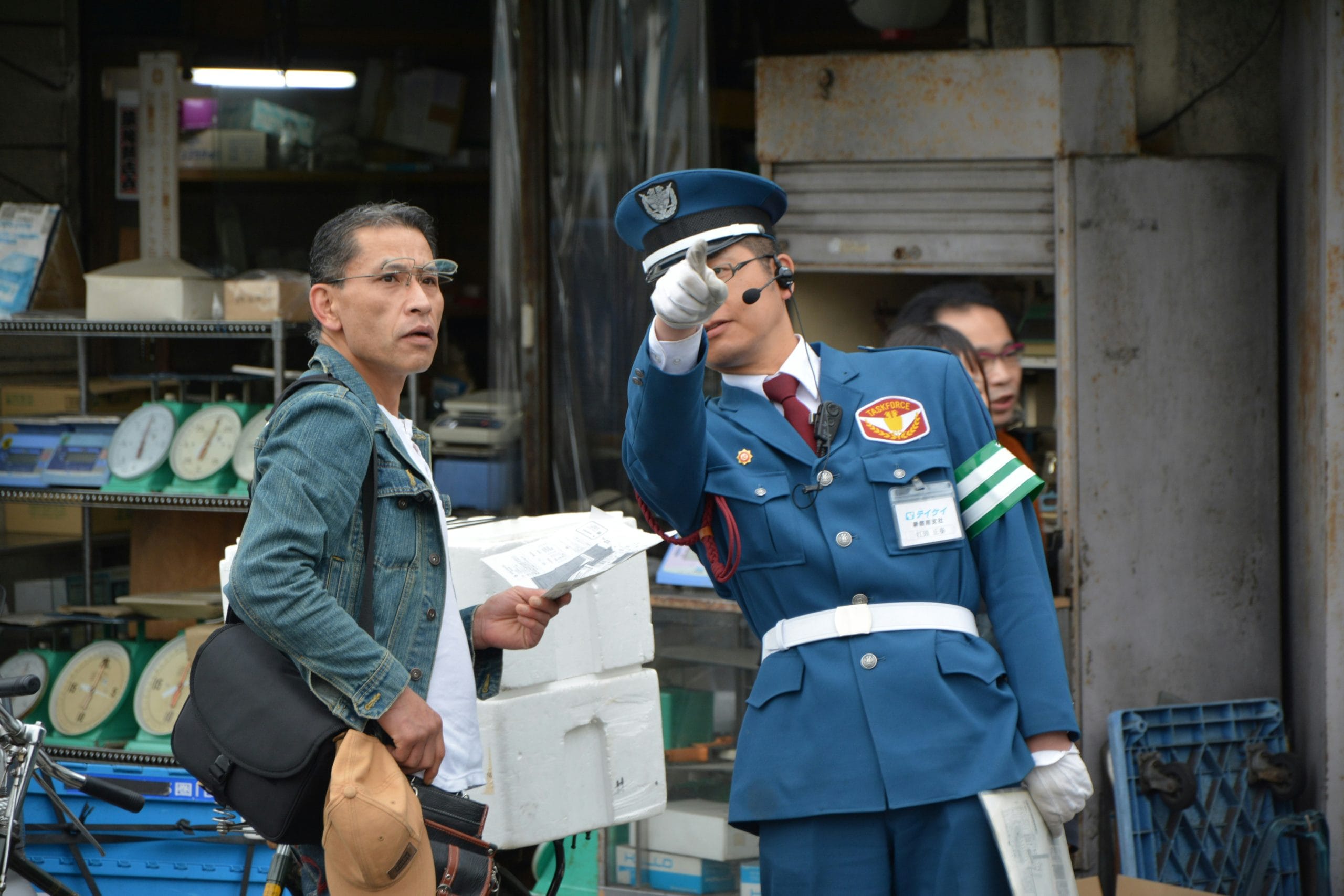
The elevator in my childhood apartment building spoke more than my neighbors.
Every morning, as its doors slid open with a restrained shuun, a soft female voice announced our arrival, apologized for the wait, and thanked us for using it—again. No one responded. No one ever does. Courtesy in Japan is not conversational; it’s infrastructural. It hums quietly in the background like electricity. You don’t notice it until it’s gone.
This is something visitors often sense before they can name it: Japan feels polite even when no humans are involved. The machines bow metaphorically. The signs apologize. The systems anticipate your confusion before you’ve had the chance to feel it. Courtesy here isn’t a personality trait; it’s an algorithm.
Courtesy Without Eye Contact
In the West, “user-friendly” design often means minimal steps, fewer words, and a certain breezy confidence: Click here. Done. Efficiency is king. Politeness is optional.
Japan flips that equation. Efficiency matters, of course—this is a country that runs trains to the minute—but it is rarely allowed to feel abrupt. Instead, systems are designed to cushion you emotionally, to soften transitions, to acknowledge your presence without demanding interaction.
Take ticket machines. In Tokyo, even the most utilitarian train kiosk offers layers of reassurance: clear visual hierarchies, polite phrasing, audible confirmations, and—crucially—apologies when something goes wrong. Error messages rarely say “Invalid input.” They say, essentially, We’re sorry, something didn’t go as expected. Please try again.
This isn’t accidental. Design scholars like Kenya Hara, former art director of MUJI, have long argued that Japanese design prioritizes omotenashi—a concept often translated as hospitality, but better understood as anticipatory care. In his book Designing Design (2007), Hara emphasizes that good design should “prepare the environment so that people feel respected without being aware of it.” The highest form of politeness, in other words, is invisible.
Talking Elevators and Apologetic Doors
Nowhere is this more literal than in elevators. Japanese elevators narrate your journey like a considerate companion: floor numbers, door warnings, directional announcements, seasonal reminders about umbrellas. They apologize for closing. They thank you for riding. Some even adjust tone based on time of day.
Western visitors sometimes find this excessive. Why so much talking? Why all the apologies?
The answer lies partly in Japan’s high-context communication culture, as described by anthropologist Edward T. Hall. In high-context societies, meaning is embedded in the environment rather than spelled out through direct confrontation. Machines, signage, and systems take on communicative roles that, elsewhere, might require human intervention.
A talking elevator reduces uncertainty. An apologetic door reduces friction. The system absorbs potential discomfort so no one has to negotiate it socially. No awkward eye contact. No raised voices. No one is “at fault.”
Signage That Assumes You’re Trying Your Best
Japanese signs are famously verbose. They don’t just instruct; they explain. They thank you in advance. They apologize for inconveniences that may or may not occur.
A construction notice might read: We are very sorry for the noise during these hours. Thank you for your understanding and cooperation. This phrasing appears even when the work is legally permitted, scheduled, and unavoidable.
Sociologist Joy Hendry, in Understanding Japanese Society (2012), notes that such language reinforces group harmony by acknowledging inconvenience before it becomes resentment. The sign doesn’t demand compliance; it preemptively validates your annoyance.
Compare this to Western signage, which often prioritizes clarity over empathy: Road Closed. Efficient, yes. But emotionally neutral at best, confrontational at worst.
Japan prefers to smooth the emotional surface. The sign does not assert authority; it negotiates consent.
Workflows That Assume Human Fragility
Even digital workflows in Japan are designed with a certain gentleness. Confirmation screens are common. So are redundant checks. You are often asked, politely, if you are really sure.
From a Western UX perspective, this can feel inefficient—extra clicks, extra steps. But from a Japanese perspective, these pauses are a form of care. They acknowledge that humans make mistakes, get distracted, or feel anxious about irreversible actions.
This philosophy echoes the work of design theorist Donald Norman, whose concept of “error-tolerant design” emphasizes systems that accommodate human fallibility. Japan takes this a step further by adding emotional cushioning. The system doesn’t just prevent errors; it reassures you while doing so.
When a payment terminal pauses to confirm the amount, it’s not mistrusting you. It’s respecting the social weight of money.
Why Not Just Be Faster?
So why doesn’t Japan streamline everything into frictionless efficiency?
Because friction, when thoughtfully applied, can be polite.
In Western tech culture—particularly Silicon Valley—speed is often framed as respect for the user’s time. Faster equals better. Less interaction equals empowerment. This mindset assumes confidence, familiarity, and a willingness to assert oneself.
Japan designs for a broader emotional spectrum. For the elderly. For the anxious. For the first-time user who doesn’t want to ask for help. For the person who would rather read an over-explained sign than interrupt a stranger.
Anthropologist Ruth Benedict, in The Chrysanthemum and the Sword (1946), observed that Japanese social systems place great emphasis on avoiding shame and public discomfort. Automated courtesy helps uphold this value at scale. The system does the bowing so you don’t have to.
When Machines Carry the Manners
There is also a practical reason Japan leans so heavily on automated politeness: density.
In cities like Tokyo, where millions of people share limited space, constant human mediation would be exhausting. Machines absorb the emotional labor. They remind, warn, apologize, and instruct with infinite patience.
Train announcements tell you exactly where to stand, when to board, and what will happen next. Not because people are incapable of figuring it out—but because clarity reduces conflict. As railway researcher Hiroyuki Kato has noted in studies on Japanese transit systems, predictability and information density are key to maintaining flow without enforcement.
Courtesy, here, is a traffic management tool.
The Western Misread
Western visitors sometimes interpret Japanese automated politeness as cold or overly formal. Why does the machine thank me? It’s just a machine.
But that misses the point. The politeness is not for the machine; it’s for you—and for everyone else sharing the system. It sets a tone. It reminds you, gently, that you are part of a collective rhythm.
In the West, friendliness is often personal and improvisational. In Japan, it is systemic and consistent. One is not better than the other. They simply prioritize different forms of comfort.
Western design asks: How can we get out of the user’s way?
Japanese design asks: How can we make sure the user never feels in the way?
Living Inside the Algorithm
After years abroad, I noticed the difference most acutely upon returning home. The first time a vending machine apologized for being out of change, I felt an unexpected wave of relief. Not because I blamed it—but because it acknowledged the disruption.
That’s the politeness algorithm at work. It doesn’t expect gratitude. It doesn’t demand engagement. It simply maintains a baseline of mutual consideration, quietly, endlessly.
You may never thank the elevator back. That’s fine. It was never about reciprocity. It was about atmosphere.
And once you’ve lived inside it, silence elsewhere can feel strangely loud.
